
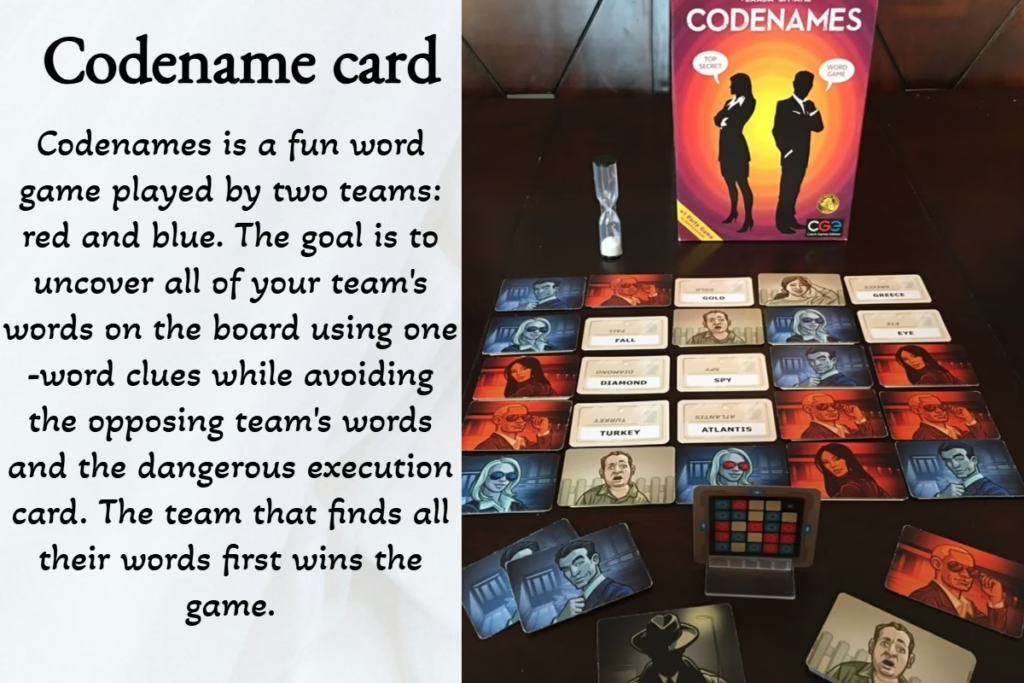
Codenames is a fun word game played by two teams: red and blue. The goal is to uncover all of your team’s words on the board using one-word clues while avoiding the opposing team’s words and the dangerous execution card. The team that finds all their words first wins the game.
Codenames Rules
- Teams are divided into spymasters and field operatives.
- A 5×5 grid of words is placed in the center, representing potential code words.
- Each spymaster receives a key card indicating which words belong to their team, which are neutral, and which is the assassin word.
- The spymaster provides a one-word clue followed by a number that signifies how many words are related to the clue.
- Field operators must guess words based on the clue when avoiding the opposing team’s words.
- If a team selects a neutral word, their turn ends quickly.
- If a team mistakenly chooses the assassin card, they instantly lose the game.
- Players can continue guessing within their turn if they guess correctly.
- Spymasters must not give additional hints following their one-word clue.
- The first team to uncover all their words without hitting the assassin wins.
How to Play the Codenames Card Game
First, you need at least four players, divided into two teams. You can also play with more people, even eight or more. Inside the box, there are many word cards with different codenames on them.
There are also red and blue tiles for the teams, some tiles for innocent people, and one special assassin tile. You will also find key cards and a stand. These key cards secretly show which words belong to which team, helping the spymasters guide their players.
Set up
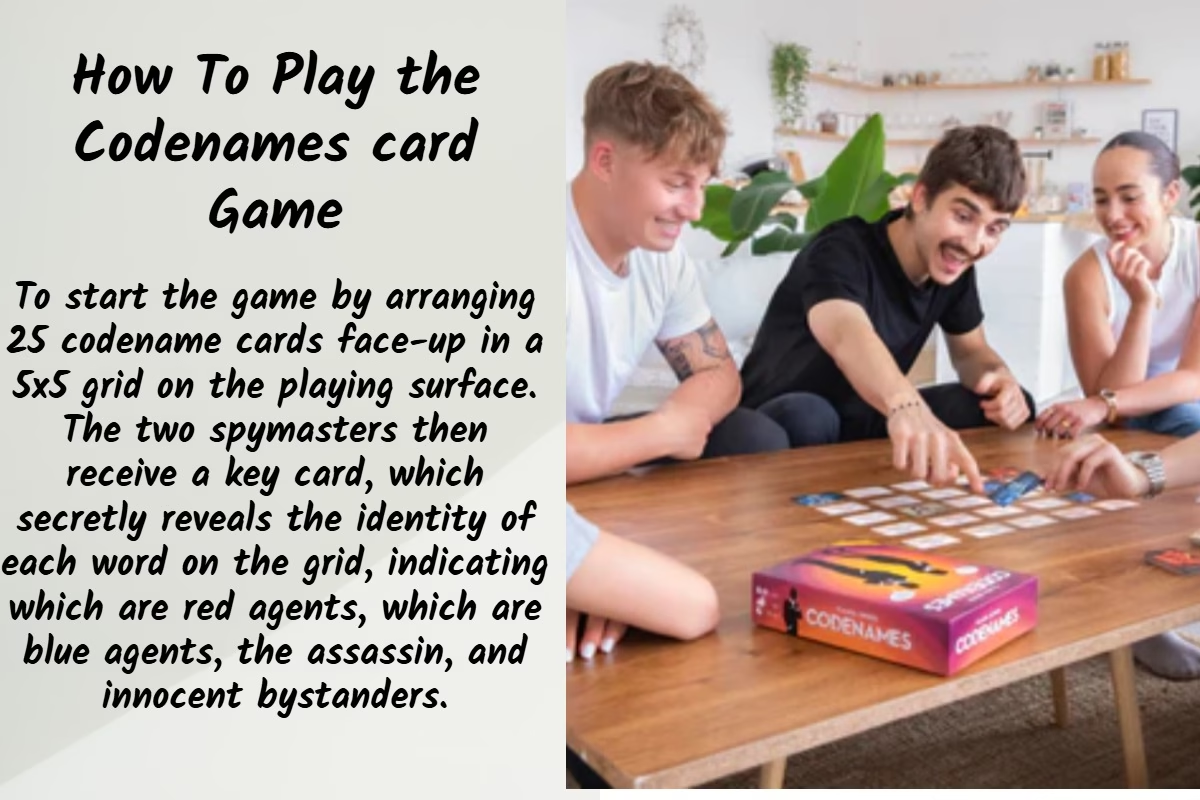
Lay out 25 word cards in a random 5×5 grid on the table. Spymasters sit together on one side of the table, while their field operatives sit opposite them. Place a randomly selected key card in the stand so only the spymasters can see its color grid. Ensure the field operatives cannot see the key to keep the identities a secret.
- 8 red player cards
- 8 blue player cards
- 7 innocent bystander cards
- 1 assassin card
- 1 double agent card
- 40 key cards
- 200 codename cards
- 1 hourglass
- 1 card base
- Rulebook
Starting
The key card will show which team takes the first turn, often indicated by colored squares along its edge. The team going first also receives the double agent card. To begin the game, the spymaster of the starting team will provide the very first clue.
Taking Turns
On their turn, the spymaster must give a one-word clue followed by a single number. The chosen word should connect to one or more of their team’s agent words visible in the grid, and the number signifies exactly how many of those words the clue is trying to guide their team towards. The clue word cannot be any of the words already present in the 5×5 grid.
Giving Clues
Spymasters must provide a clue consisting of exactly one word and one number. The word should relate to the meaning of the cards on the table. The number indicates how many agents that specific clue applies to. You cannot use a word that is currently visible on the grid as your clue.
Guessing Words
Field operatives discuss the clue and then touch a card to make an official guess. If the guess is correct, the spymaster places their team’s agent tile over the word. Operatives must make at least one guess per turn. They can make one extra guess beyond the number provided to try and catch up on previous missed clues.
Winning the Game
Your team wins the moment all your agents are covered by your team’s tiles. Be careful, because you can also win during the opposing team’s turn if they accidentally guess your last word.
Playing Online
You can play Codenames online, even if you’re not in the same place. Simply visit codenames. Game to create a room. You can set up game rules, invite friends, and even use audio or video chat to improve communication. A unique room location can be shared with your friends for easy access. Additionally, there are free web browser versions of both the original Codenames and the two-player cooperative version called Duet available on the website, making it accessible to everyone.
Variations of the Codenames
Codenames offers several exciting variations that add different twists to the core gameplay:
- Codenames: Duet: This is a cooperative version designed for two players. Partners work together to find all their agents before time runs out, using a double-sided key card in which each player sees different agents.
- Codenames: Pictures: Instead of words, this version uses cards featuring surreal images, arranged in a 5×4 grid. The clue-giving and guessing mechanics remain largely the same.
- Codenames: Deep Undercover: Marketed as an adult version, this edition uses word cards with more mature and suggestive content.
- Codenames: Disney Family Edition: This version features beloved characters and locations from Disney and Pixar films, with simplified rules and a smaller 4×4 grid without the assassin, making it suitable for younger players.
- Codenames: Marvel Edition: Immerse yourself in the world of Marvel Comics with this edition featuring superhero characters.
- Codenames: Harry Potter: Fans of the wizarding world can enjoy this version themed around the Harry Potter book series, often played in a cooperative style similar to duet.
- Codenames: XXL/Pictures XXL/Duet XXL: These are simply larger versions of their original counterparts, featuring double-sized cards for easier visibility.
Conclusion
Codenames stands out as a highly enjoyable party game that masterfully combines strategic clue-giving with collaborative guessing. Its simple yet engaging mechanics make it accessible to a wide range of players, whether playing face-to-face or in the digital realm. With its various editions and the core game’s inherent replayability, Codenames promises countless moments of laughter and strategic thinking.
FAQs
What is the primary goal in a game of Codenames?
The primary goal in Codenames is for your team to be the first to identify all of your secret agents hidden among the 25 word cards on the board, based on the one-word clues provided by your spymaster.
How does a spymaster give a clue in Codenames?
A spymaster provides a clue by giving only one word followed by a single number. The word should relate to one or more of their team’s agent words on the grid, and the number indicates how many of those words the clue is intended for. The clue word itself cannot be a word that is already visible on the board.
What is the maximum number of guesses a team can make on their turn?
After a spymaster gives a clue, their team must make at least one guess. For each correct agent word guessed, they can make an additional guess, up to a maximum of one more than the number given in the clue. However, an incorrect guess (choosing an opponent’s agent or a bystander) or guessing the assassin immediately ends their turn.
What is the consequence of a team guessing the assassin card?
If a team mistakenly guesses the assassin card, the game ends immediately, and that team loses. The opposing team is declared the winner.
How many players are typically required to play Codenames?
The standard Codenames game is best played with four or more players, divided into two teams of at least two people each. Each team needs one spymaster and at least one field operative. However, the Codenames: Duet version is specifically designed for two players.
What’s the point of Codenames?
Codenames are often used for military purposes, or in undercover operations. They may also be used in industrial investigations to protect secret projects or development phases and similar efforts from business competition. Codenames are also given to projects whose marketing name has not yet been determined.
Discover more from Miexto Card Games
Subscribe to get the latest posts sent to your email.